



POS Skills Defination:
POS skills are the abilities employees need to effectively operate a point-of-sale system, including transaction handling, payment processing and customer service.
POS skills are essential for smooth transactions in today’s highly competitive business and service sectors. These skills are necessary for employees, from cashiers to managers, to ensure efficient business operations and smooth customer service. But what is pos skills, and why are they important?
In this article, we will break down POS skill meaning and understand what are pos skills, how mastering them can enhance your career, and why they are vital for modern businesses. Let’s dive into the essentials of point-of-sale skills and how they can impact customer experience and operational efficiency.
Learn about Point of Sale Experience and Reconciliation

What is POS Skills?
POS skills refer to the technical and customer service abilities needed to operate a point-of-sale system. This includes installing, updating, and troubleshooting the system and using its data to make better business decisions. Additionally, point-of-sale skills involve handling transactions smoothly while ensuring customer satisfaction and loyalty. Mastering these skills helps businesses streamline operations and improve overall performance. A POS skill encompasses knowledge of hardware, software, customer interaction, and money handling, making it crucial for many job roles.
What is POS Skill Meaning?
POS Skill Meaning refers to the ability to manage and operate a point-of-sale (POS) system. This includes processing transactions, handling payments, managing inventory, and generating sales reports. These skills help businesses run smoothly, especially in retail, hospitality, and other industries.
Good POS skill meaning understanding how to use the system’s software, troubleshooting common issues, and managing customer transactions in a friendly and effective manner. The right point-of-sale skills can make a difference between seamless customer service and long delays.
👉 In simple words: POS skills mean knowing how to use a POS machine/software while serving customers quickly, accurately, and professionally.
What Are POS Skills?
POS skills extend beyond just processing payments. These skills include:
- Basic POS Operation: Navigating the POS system, entering transactions, and completing sales.
- Inventory Management: Using a POS system to monitor stock levels and update inventory.
- Customer Interaction: Manage customer information, process refunds, and apply discounts.
- Payment Processing: Handling cash, credit/debit cards, and digital wallets.
- Troubleshooting: Resolving errors or issues during transactions.
- Security Awareness: Ensuring the protection of sensitive customer data.
With the advancement of technology, point-of-sale skills now involve using integrated systems, like CRM (Customer Relationship Management) tools, for enhanced business management.
Learn about What is a POS Person? Click here!
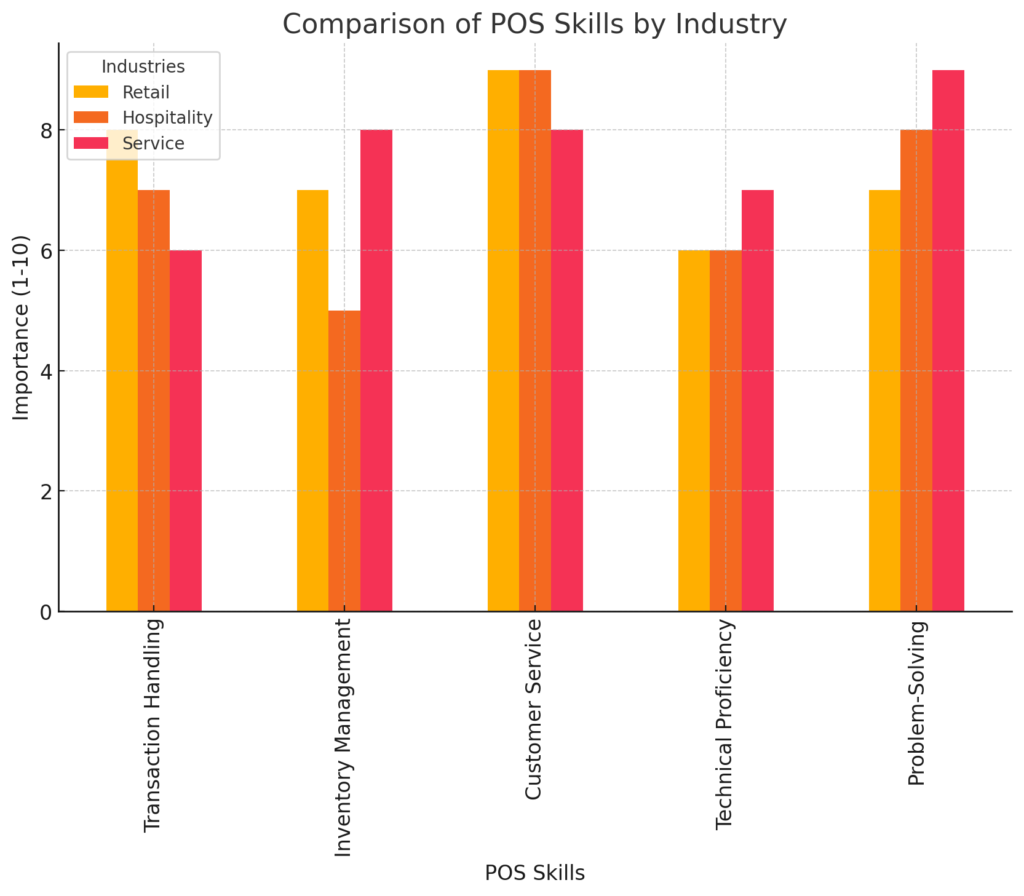
Comparison of POS Skills by Industry
This chart shows how the importance of POS skills like transaction handling, customer service, and problem-solving varies across retail, hospitality, and service industries. Each industry values different skills based on its specific needs, with customer service being crucial in retail and hospitality and problem-solving in service sectors.
Key POS Skills You Need to Master
Here are the top POS skills every cashier, retail associate, or restaurant server should have:
Transaction Handling
- Scanning items, applying discounts, and completing sales.
- Handling returns and exchanges smoothly.
Payment Processing
- Accepting different payment methods: cash, debit/credit cards, POS debit, mobile wallets, QR payments.
- Ensuring accurate change and secure processing.
Inventory Awareness
- Understanding stock levels.
- Updating sold items automatically through POS software.
Customer Service Skills
- Greeting customers, answering questions, and offering upsells.
- Staying polite and professional during checkout.
Security & Compliance
- Following anti-fraud and company compliance policies.
- Protecting customer data during payments.
Troubleshooting POS Systems
- Handling basic technical issues (receipt printer not working, slow system).
- Knowing when to escalate to IT or POS provider.
Why POS Skills Are Important for Businesses
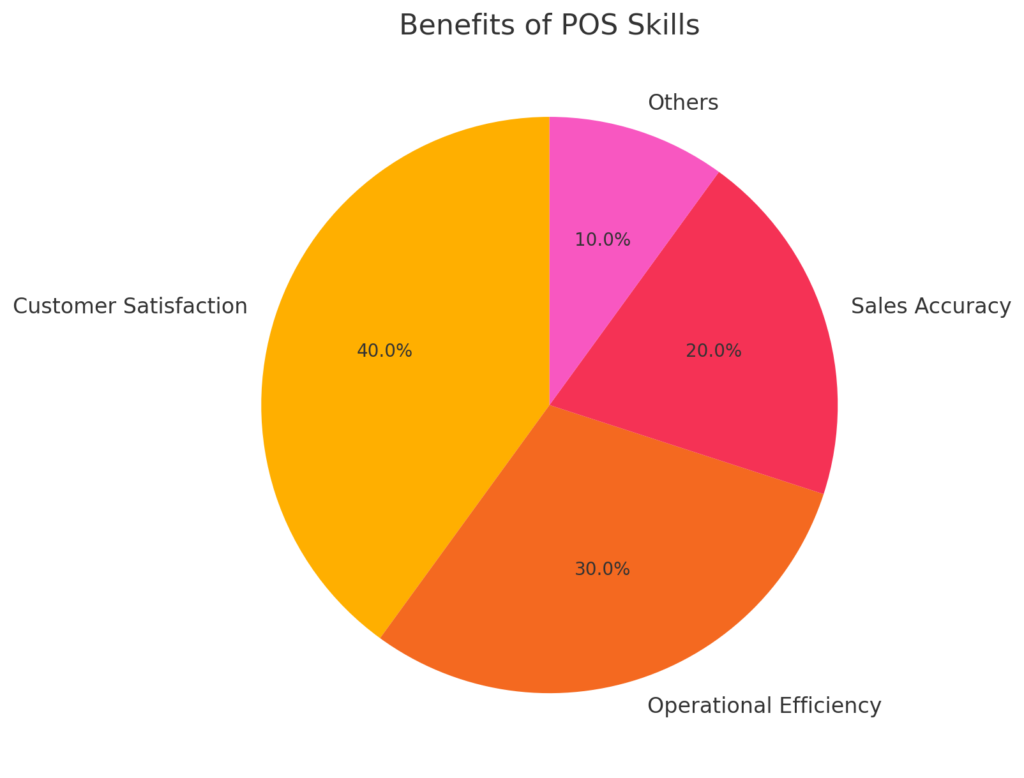
In today’s fast-paced business environments, POS skill are critical for several reasons:
- ✅ Speed up customer checkout and reduce wait times.
- ✅ Improve payment accuracy and reduce human error.
- ✅ Help staff manage discounts, refunds, and promotions.
- ✅ Ensure smooth restaurant orders and table management.
- ✅ Increase customer satisfaction and loyalty.
For businesses, well-trained employees with POS skills directly impact sales, efficiency, and the overall customer experience.
Learn about Retail Cloud POS Software for Retail Stores
POS Job Skills vs POS System Features
The POS job skill required for handling a Point-of-sale system aligns with the features provided by the system. Below is a table showing the common POS job skill and their relevance to various POS system features.
| POS Job Skill | POS System Knowledge | Customer Interaction | Payment Handling | Inventory Tracking | Data Security |
|---|---|---|---|---|---|
| Problem-Solving | Yes | No | Yes | Yes | No |
| Customer Service | Yes | Yes | Yes | No | No |
| Speed and Efficiency | Yes | Yes | Yes | Yes | No |
| Inventory Management | Yes | No | Yes | Yes | No |
| Security Awareness | No | No | Yes | No | Yes |
How to Improve Your POS Skills
1. Training and Hands-On Practice
The best way to improve your POS skills is through hands-on practice. Familiarizing yourself with the POS system by using it regularly will help you develop better speed and accuracy. Many businesses provide training sessions for their employees, and participating in these will ensure you’re up to date on the latest system features.
2. Stay Updated with New Features
Technology is always evolving, and POS systems are no exception. Regularly updating your knowledge about new features, enhancements, or changes in Point-of-sale systems will keep your skills sharp. You can do this by attending workshops and webinars and reading industry-related blogs and articles.
3. Understand the Different POS Systems
There are many different types of POS systems out there, each designed for specific industries. Learning about various POS systems can help you adapt quickly to different job environments. Explore POS systems for restaurants, retail, and other service industries to expand your skill set.
POS Skills in Different Industries
POS skills may vary depending on the industry.
Retail POS Skills
- Barcode scanning and price adjustments.
- Managing customer loyalty programs.
- Handling seasonal promotions.
Restaurant POS Skills
- Splitting bills and handling tips.
- Sending orders to the kitchen via POS.
- Managing tables and reservations.
Service Business POS Skills
- Selling memberships or packages.
- Appointment booking via POS.
- Tracking customer history for personalized service.
Common POS System Features
Understanding the features of different point-of-sale systems is key to mastering POS skills. Different systems have different functionalities that are useful depending on the industry.
| POS System | Transaction Handling | Inventory Management | Customer Data Integration | Employee Management | Mobile Support |
|---|---|---|---|---|---|
| Square | Yes | Yes | Yes | Yes | Yes |
| Clover | Yes | Yes | Yes | No | No |
| Hulm | Yes | Yes | Yes | Yes | Yes |
| Lightspeed | Yes | Yes | Yes | Yes | No |
Common POS Job Skills Employers Look For
When employers are hiring staff for POS-related roles, they often look for specific POS skill that match their business’s needs. Below are some common POS job skill that employers prioritize:
- Problem-solving ability: Can you troubleshoot issues with the POS system or fix technical glitches?
- Customer service skills: Are you able to handle customer complaints or requests while maintaining professionalism?
- Attention to detail: Can you accurately handle transactions without making mistakes?
- Speed and efficiency: How quickly can you process sales or refunds while maintaining accuracy?
- Knowledge of inventory management: Do you understand how the POS system integrates with inventory control systems?
How to Train Staff in POS Skills
Training employees in POS skills is critical for smooth business operations.
POS Skill Training Checklist:
- Introduce staff to the POS dashboard and navigation.
- Practice handling different payment methods.
- Simulate real-life scenarios: refunds, discounts, voided sales.
- Teach inventory management basics.
- Provide customer service role-play sessions.
- Train on basic troubleshooting steps.
- Monitor performance and give regular feedback.
👉 Pro Tip: Use Hulm Solutions POS training modules to simplify staff learning.
Conclusion
In 2025 and beyond, POS skills remain critical for retail, restaurants, and service companies. Employees with strong POS skills not only keep operations running smoothly but also improve the customer experience.
If you’re looking to train staff and upgrade your POS system, consider Hulm Solutions POS — a powerful, modern POS system designed to simplify transactions and boost business efficiency.
For more information about Point of Sale skills for your resume, click here!
FAQs About POS Skills
Ans. A POS skill refers to the knowledge and abilities needed to use a Point of Sale system effectively. These include understanding how to operate the software, manage financial transactions, and assist customers.
Ans. To improve your POS skills, practice using the system regularly, stay updated with system changes, and attend any available training. Hands-on experience and a willingness to learn new technologies are key.
Ans. POS skills are used to process transactions, manage inventory, handle customer payments, and ensure smooth business operations in industries like retail, hospitality, and food service.
Ans. In retail, POS skill meaning refers to proficiency in using the POS system to complete sales transactions, track inventory, and assist customers effectively.
Ans. Yes, having strong POS skill is highly valuable for job seekers, especially those looking for work in retail, hospitality, or any field that requires frequent customer transactions.
Ans. Examples include transaction handling, processing payments, inventory awareness, customer service, and troubleshooting.